
DIGIMON UP
Bandai Namco Entertainment Inc.Role Playing
3.63.77K Reviews
- Version
- 1.3.0
- Installs
- 1.00M
- Age Rating
- Everyone
Screenshots

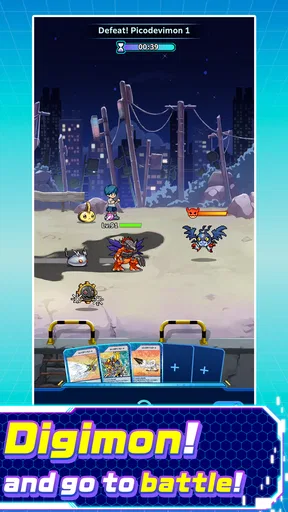
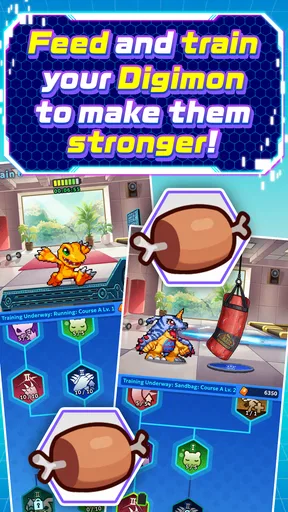

Our Review of DIGIMON UP
 Analysis by Appyee
I found DIGIMON UP most interesting as a game that can fit into a shared household routine without pretending to be a full family-management tool. It is a free monster-raising role-playing game from Bandai Namco Entertainment Inc., and the basic appeal is easy to understand: you build a relationship with Digimon, develop them over time, and make decisions about how to spend your attention and resources. The “DIGIMON UP” idea is simple, but the experience depends heavily on whether you enjoy gradual progress rather than constant action.
I played it with the mindset of someone deciding whether it belongs on a personal phone, a child’s device, or a device used by several people at home. That distinction matters. A shared screen can make a character-raising game feel like a small household project, but it can also create confusion when different people have different expectations about progress, purchases, or whose turn it is. My overall impression is positive for Digimon fans who enjoy patient collection and development, although the random-item purchases deserve more attention than the cheerful presentation might suggest.
How DIGIMON UP fits into a shared household
The most natural shared-use scenario is not handing the game around every few minutes. It works better when one person takes responsibility for the main save or device, while another family member watches, suggests choices, or checks in on the Digimon’s development. That arrangement keeps the game’s identity intact. Raising a creature feels more meaningful when decisions are consistent, rather than being changed by several people who all want a different result.
For example, I can imagine a parent and child checking the game together after school. The child chooses which Digimon to focus on, while the adult helps decide whether an item is worth using now or saving for later. This creates a useful conversation about planning without turning the game into homework. The important boundary is that the household should agree who makes final decisions before progress begins.
On a shared tablet or family phone, I would avoid treating the game like a communal save unless everyone is comfortable with permanent changes. A new training choice, development decision, or item use may reflect one player’s preference and not another’s. Even when the game is easy to understand, shared enthusiasm can become shared frustration if someone opens it expecting to continue their own plan.
The best household setup is one clear player, with optional spectators and helpers. That approach avoids the most common problem with shared games: nobody feels fully responsible, yet everybody feels entitled to the progress.
What to decide before installing
Because the game is free to start, the initial decision is not mainly about purchase price. The more useful conversation is about time, ownership, and spending. The game includes in-app purchases ranging from $0.99 to $64.99 per item, so I would discuss those boundaries before allowing a child to play on a device connected to a payment method.
I would also decide whether the game belongs on an adult’s account, a child’s account, or a general household device. That choice affects trust and expectations even when the game itself is suitable for Everyone. A child may understand that a purchase costs money but still not understand why a random item is different from buying a clearly identified object. I would explain that chance-based purchases are not the same as choosing exactly what you receive.
Another practical boundary is session length. Monster-raising games can encourage frequent checking because progress feels gradual and personal. That can be pleasant, but it may also lead to repeated short visits throughout the day. In my experience, agreeing on a few regular check-in times works better than arguing about every individual launch.
For a household device, I would keep notifications and access expectations simple. If several people use the same phone, the person responsible for the game should be able to say when it is available. Otherwise, the game can become a source of small interruptions rather than a relaxing activity.
Keeping progress and purchases understandable
The random-item element is the biggest reason I would not leave spending decisions vague. A child can enjoy the raising and role-playing parts without being ready to evaluate repeated chances for a desirable result. I would make a firm rule that no purchase happens without asking first, even if the amount looks small.
That rule is useful for adults too. Small purchases can feel harmless when considered separately, while repeated attempts can change the total cost quickly. I would treat every random-item purchase as a deliberate choice, not as a routine shortcut for progress. If the household cannot agree on that, I would keep the game strictly free-to-play.
There is also a coordination issue around resources. In a character-raising game, an item used impulsively may support one plan but weaken another. I would encourage a short pause before spending anything valuable: identify the current goal, check whether the item helps that goal, and only then confirm. This is a simple habit, but it prevents the “I thought you were saving that” argument.
For younger players, an adult can turn that pause into a learning moment without taking over. Ask what the item is meant to accomplish and why it should be used now. That keeps the child involved while making the decision visible. It is more useful than silently restricting access because it teaches a repeatable way to think about optional purchases.
Age suitability and trust
The Everyone content rating makes the game approachable for a broad audience, and the monster-raising theme is naturally easier to share with younger players than a darker role-playing game. Still, an age rating does not answer every household question. It describes the general content experience, not whether a particular child is ready to handle random purchases, gradual progression, or the disappointment of not receiving a desired item.
I would be comfortable introducing it to a child who already understands that digital items have real value and that free access does not mean unlimited spending. For a very young player, I would keep the game on an adult-controlled device or play together. The goal is not to make the experience restrictive; it is to make the rules clear enough that trust can grow.
Older children may appreciate more independence, especially if they already enjoy role-playing games and collecting. Even then, I would explain the difference between the game’s normal progression and optional purchases. A player should know that choosing not to spend money is a valid way to play, rather than feeling that purchases are an expected part of keeping up.
Adults should also be honest about account boundaries. If the game is installed on a shared device, do not assume every family member has the same authority over the save or payment method. A short agreement about who plays, who approves purchases, and what happens if someone wants a separate start can prevent most avoidable conflict.
Where the role-playing loop works well
As a role-playing game, DIGIMON UP is less about a single dramatic session and more about building a longer relationship with your monsters. That makes it a good fit for players who enjoy checking progress, making small decisions, and seeing a collection develop. I found the raising premise more appealing when I treated it as a routine rather than chasing immediate rewards.
This is also where it differs from many action-focused alternatives. A conventional battle-heavy role-playing game may give you a clearer sense of moment-to-moment control, while a monster-raising game asks you to accept slower feedback. If you want constant combat or a tightly directed story, this may feel too patient. If you like nurturing a roster and thinking about the next stage of development, its pace is more comfortable.
The Digimon identity gives the game a stronger reason to exist than a generic collection title. Familiar creatures can make ordinary progression feel personal, especially for players who already have favorites. However, recognition alone will not fix a mismatch in play style. Someone who does not enjoy repeated development decisions may lose interest even if they like the characters.
One useful way to approach the game is to choose a small personal objective for each session. Instead of trying to improve everything at once, decide whether you are checking on a particular Digimon, preparing for a future development choice, or simply reviewing available resources. This reduces unfocused spending and makes short sessions feel complete.
Practical coordination for several players
If two people want to participate, I recommend dividing responsibilities instead of competing for control. One person can make the main development decisions, while the other tracks goals, suggests priorities, or handles discussion about which items should be saved. This works particularly well between siblings or between a parent and child because both players have a role without constantly changing the direction of the save.
A simple household note can help: write down the current goal, the next decision that needs agreement, and whether purchases are allowed. This may sound excessive for a mobile game, but it is useful when the device is shared irregularly. It also makes it easier for someone to return after several days without undoing a plan they did not know existed.
I would not recommend letting several people independently “improve” the same Digimon unless the group genuinely enjoys unpredictable results. Different players may value different outcomes, and the game’s raising focus makes those choices feel more consequential than changing a cosmetic setting. A shared save should be collaborative by agreement, not shared merely because the app is installed on a common device.
For a family with multiple interested players, separate devices or clearly separated accounts are preferable when available and appropriate. I am deliberately treating that as a household organization choice rather than assuming any particular account or profile feature inside the game. The key principle is simple: each person should know where their progress lives and who can change it.
How it compares with familiar alternatives
Compared with a standard role-playing game built around battles and a fixed party, this game places more emphasis on the feeling of raising and managing Digimon. That can make it more approachable for someone who likes collecting but finds complex combat systems tiring. It may also be easier to discuss with a child because the central question is often about development and care rather than only winning the next fight.
Compared with a purely casual collection game, it offers a more character-focused reason to return. The creatures are not just icons to gather; the appeal comes from watching a chosen direction take shape. The trade-off is that the experience can feel slower and less immediately rewarding than a game designed around quick unlocks.
Compared with premium role-playing games that ask for an upfront payment, the free entry makes experimentation easier. You can discover whether the raising loop suits you before committing money. The downside is the presence of random-item purchases, which means the financial decision does not end at installation. Players who strongly prefer a single transparent price may feel more comfortable with a paid alternative.
For a household, I would choose DIGIMON UP over a competitive multiplayer game when the goal is a calm shared interest with room for discussion. I would choose a different game when everyone needs an independent save, when sessions must be completely predictable, or when the family wants a game with no chance-based spending at all.
Performance expectations and version context
The current version is 1.3.0, and the game requires Android 9 or later. That makes the operating-system requirement an important first check before planning a household installation, especially if the shared device is older. A game can be a good fit in every other respect and still be inconvenient if the family phone or tablet cannot run it.
I would also avoid judging the experience from a single short session. The raising concept needs time before its strengths become clear, while the friction around resources and random items becomes more visible as you continue. Give it enough room to establish a routine, but do not spend money during that trial period simply to make the early experience feel faster.
The game has reached over a million installs, with an average rating of 3.6 from roughly sixty-five thousand ratings. I read that combination as a sign of broad interest but mixed satisfaction, not as a reason to dismiss it. The likely explanation is that the game appeals strongly to players who want this particular Digimon-raising format, while others may be less comfortable with its pace or purchase structure.
Who should install it, and who should pass?
I would recommend it to Digimon fans who enjoy gradual progression, players who like raising systems more than constant action, and households willing to establish clear rules around a shared device. It is especially suitable when one person wants to be the main player and others are happy to participate through conversation and occasional decisions.
I would be more cautious for anyone who dislikes random-item mechanics, feels pressured by frequent optional purchases, or wants every reward to be directly chosen. The free price makes trying it easy, but it does not remove the need for spending discipline. I would also suggest skipping it if your household cannot agree on who owns the save or who approves purchases.
For a child, the game can be a pleasant introduction to planning and caring for a collection, provided an adult sets expectations first. For an adult Digimon fan, it can be a relaxing side game, but only if the slower rhythm feels rewarding rather than repetitive. The right audience is not defined only by age; it is defined by patience, trust, and comfort with optional chance-based items.
My household verdict
After looking at the game as both a player and a shared-device reviewer, I see DIGIMON UP as a focused monster-raising RPG rather than an all-purpose family game. Its strongest feature is the personal feeling that comes from guiding Digimon over time. Its main weakness is that the same gradual loop can feel limited to players who want fast action, while the random-item purchases require firm household boundaries.
I would install it on a personal device or on a shared device with one clearly responsible player. I would keep purchases opt-in, discuss them before play begins, and use the game as a collaborative conversation rather than a free-for-all save. Those steps preserve the enjoyable parts without allowing confusion about progress or money.
Bandai Namco Entertainment Inc. has made a free entry point for a recognizable monster-raising idea, and I think it is worth trying if that concept already appeals to you. My recommendation is conditional but genuine: start without spending, establish who controls the game, and judge whether the development loop earns a place in your routine. If it does, the game can become a small shared ritual; if it does not, a more direct role-playing game will probably serve your household better.
Verdict
Strengths of DIGIMON UP
- Simple tap-based gameplay is easy to learn for younger players.
- Digimon collection gives fans a clear reason to keep playing.
- Short play sessions work well for quick mobile gaming breaks.
- Familiar Digimon designs add nostalgic appeal for longtime fans.
- Progression rewards provide a steady sense of achievement.
Limitations of DIGIMON UP
- Gameplay may become repetitive after the initial discovery period.
- Limited depth could disappoint experienced RPG or strategy players.
- Some content may require frequent grinding to unlock.
- Performance can vary on older Android and iOS devices.
- In-app purchases may speed up progress for impatient players.
Other Releases by Bandai Namco Entertainment Inc.
View All
ONE PIECE Bounty Rush
Action4.3

DRAGON BALL LEGENDS
Action4.4

DRAGON BALL Z DOKKAN BATTLE
Action4.6

ONE PIECE TREASURE CRUISE-RPG
Role Playing4.5
Similar Picks in This Category
View All
Hair Dye
CrazyLabs LTD4.4

Monster High™ Beauty Salon
CrazyLabs LTD4.5

Bus Simulator - Bus Games 3D
Jima Apps4.4

Flight Pilot: 3D Simulator
Wildlife Studios4.1


Super Stylist Fashion Makeover
CrazyLabs LTD4.4
Frequently Asked Questions
What is DIGIMON UP, and what can I do in the app?
DIGIMON UP is a Digimon-themed mobile experience designed for fans who want to interact with the franchise on their Android or iOS device. Depending on the version and region, it may include character information, digital collection features, missions, events, or other interactive content. Before downloading, check the official store description because available functions, supported Digimon, and online features can vary by update and country.
Is DIGIMON UP free to download and play?
DIGIMON UP may be available as a free download, but users should review the store listing carefully for optional purchases, subscriptions, advertisements, or content that requires payment. Some features, items, or progression advantages may be offered through in-app purchases. I recommend checking the purchase settings on your device and confirming the app’s age rating before allowing children to access any payment-related features.
Does DIGIMON UP require an internet connection?
An internet connection may be necessary for downloading game data, signing in, synchronizing progress, receiving updates, participating in events, or accessing online services. Even if certain sections appear to work offline, full functionality may not be available without Wi-Fi or mobile data. Players should also expect additional downloads after installation, so using Wi-Fi can help avoid consuming a large amount of mobile data.
Which devices are compatible with DIGIMON UP?
Compatibility depends on the specific Android or iOS version of DIGIMON UP, as well as your device’s operating system, available storage, and hardware performance. Older phones and tablets may not support the app or could experience slower loading, crashes, or reduced visual quality. Before installing, compare your device with the minimum requirements shown on Google Play or the App Store.
Is DIGIMON UP suitable for children and does it protect user data?
DIGIMON UP’s suitability depends on its age rating, communication features, advertising, and the presence of in-app purchases. Parents should read the official privacy policy and store information before installation, especially if a child will use the app. It is also wise to enable parental controls, restrict purchases, and review permissions so the application only receives access that is genuinely needed for its features.
Play our best games!


